(07.11.2026)
Looking for a moth.
The air is heavy here, a mixture of moisture, electric hum and birdsong.
There is a light grey that hangs over the village, occasionally pierced by a warm light. It doesn’t feel like summer yet.
I wonder how a moth knows when it is time to make its journey towards these mountains.
I’ve encountered a handful of Bogong moths during my walks around the village. Ones that have made it to the cool moist air. A few have congregated inside the dam wall. An artificial cave.
I’m reading essays by Rob Nixon and thinking about the things we build to control nature and their long lasting impacts.
I’m searching for the spectacle, a swarm of moths reaching their destination here in the mountains.
I should say a whisper. The collective noun for a group of moths is a whisper.
You can only hear a whisper when you listen closely.
I think about looking slowly. How do we see things that happen gradually, out of sight?
Bogong Moth populations dropped 99.5 percent over the past decade.
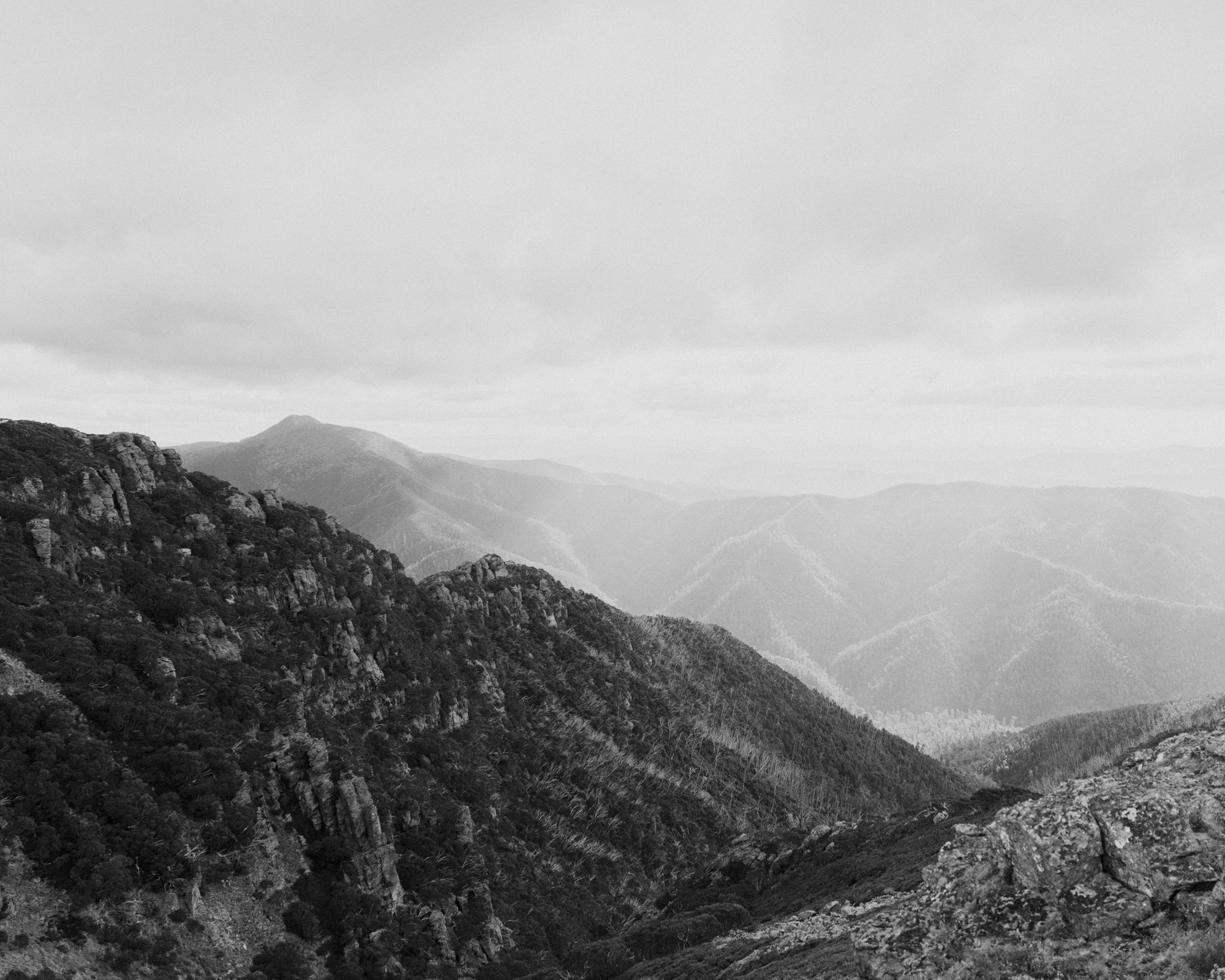
I hike out of the village, following steep fire trails towards the high plains.
The thick scrub thins as I gain elevation. Piles of granite boulders disrupt the rolling landscape.
After pitching my tent on the saddle between Mount Fainter North and South, I explore the granite that acts as a refuge for the moths during summer months.
Shards of light from my headtorch filter through cracks in the rock. I see piles of Bogong moth wings. None of these moths are alive and I wonder why they haven’t survived.
I’d assumed these caves were a sanctuary, a safe haven at the end of a long journey. Now I wonder about the challenges they face here.
I watch the sun sink below the horizon and sleep with sore legs.
In the morning I descend back down the mountain towards the village and submerge my legs in the cold water of the creek.